
Cuadernos de China
中国笔记
It is the official academic publication of the Venezuelan Association for Chinese Studies (AVECH) 委内瑞拉中国研究会. They are dedicated to the dissemination of studies about the politics, international relations, economy, society, science and technology, and culture of China; among other topics typical of recent Chinese studies. Its publication is overseen by an editorial committee coordinated from the Center for the Study of Africa, Asia, and Latin American and Caribbean Diasporas "Dr. José Manuel Briceño Monzillo" (CEAA)of the University of Los Andes (ULA), Mérida - Venezuela.
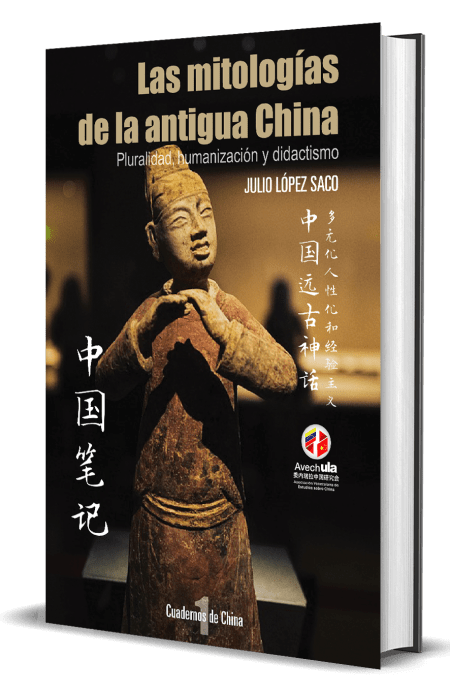
Las mitologías de la antigua China: Pluralidad, humanización y didactismo [The mythologies of ancient China: plurality, humanization and didacticism]
Julio López Saco
In ancient China one must speak of mythologies, because they have belonged to different clans. This led to the absence of systematic mythological material. There were never any mythological compilers. These mythologies have a fragmentary character; they are scattered in uneven literary works and iconographic repertoires. Its anecdotal and didactic character has been an attribute, since on numerous occasions myths were used as paradigms by Confucianism. China did not produce any mythology (a system of myths), until the Han era, when the Confucian lawyers, following their political ideals, created a historized and rationalized mythology.
Develando los secretos de la pagoda del Templo de Famen en la Provincia de Shaanxi [Unveiling the secrets from the pagoda of the Famen Temple in the Province of Shaanxi]
Walburga María Wiesheu
Severely damaged by an earthquake and heavy rains, in 1981 the brick pagoda of Famensi (Templo of the Dharma Gate) collapsed and when in 1987 archaeologists undertook excavations, they discovered a sealed context from the year 874 in its “Underground Palace” (Digong), built in the form of a Chinese tomb. The unearthed relics of purported finger bones from the historic Buddha and the untouched sumptuous objects, probably donated by several emperors, are regarded as one of the most important discoveries of Chinese archaeology in the 20th Century and were declared the Ninth Wonder by UNESCO. Today Famensi and its pagoda, now reconstructed, constitute an important site of pilgrimage. In this paper I describe these extraordinary finds and outline its relation with Esoteric Buddhism and the ritual practices of relic veneration by members of the royal court, as well as their political use by emperors who tried to establish a Kingdom of Buddha in East Asia, especially the famous Tang dynasty empress Wu Zetian.


China y Latinoamérica: Una relación transformadora del orden global [China and Latin America: a transformative relationship of the global order]
Xulio Ríos
Relations between China and Latin America are at a key moment. The intensification of ties in the last two decades has stimulated political, economic, cultural and other exchanges. The Belt and the Road Initiative promotes a greater connection between China and Latin America that serves as the basis to incubate a large market that facilitates trade and investment. Latin America wants China to be a preferred partner to increase its capacity for innovation and promote a new cycle of industrialization that will increase its geopolitical autonomy. The difficulties in concluding a common perspective in the countries of the region against China are more than a few. In addition, the US observes with great suspicion the growth of the presence and influence of the Asian giant in the hemisphere. Governments and societies in the region face the challenge of articulating the management of their interests, balancing the role of traditional actors, including Spain.
China y la planificación familiar: La política del hijo único [China and family planning: The one-child policy]
Ramón Alonso Dugarte Rangel
When the People’s Republic of China was proclaimed in 1949, its demographic goals included reducing mortality, increasing life expectancy, and controlling overpopulation. To this end, since 1956 a series of family planning policies or campaigns have been implemented to prevent uncontrolled population growth. In 1979, the fourth of these campaigns was approved, which included the one-child policy, in force until 2015. Our intention is to present a balance of family planning policies in China, studying the theoretical aspects of the demographic transition, briefly reviewing each of these campaigns, detailing the particularities of the one-child policy, and finally, analyzing the consequences.


China y la Ruta de la Seda Sanitaria en momentos de Covid-19 [China and the Health Silk Road in moments of Covid-19]
Sunamis Fabelo Concepción y Ruvislei González Saez
The advance of the Covid-19 pandemic has strengthened the necessity to promote the health cooperation. China has been noted for its international medical collaboration. This has been criticized, essentially, by the United States of America. In middle of this scenario, the attacks are deepened with clear geopolitics conception against Beijing. The article explains the main elements that express the forces of China in the health sector on the basis of the cooperation and complementarity and can be consolidates in the framework of the advance of the Health Silk Road.
¿Desafió China a Estados Unidos prematuramente? [Did China defy the United States prematurely?]
Alfredo Toro Hardy
This work synthesizes the essence of the content of my new book China versus the US: Who Will Prevail? which ultimately seeks to answer the following two questions: Did China challenge the United States too early and, by doing so, attract problems that jeopardize its chances of achieving its objectives? Is it, on the contrary, too late for the United States to contain China’s rise?

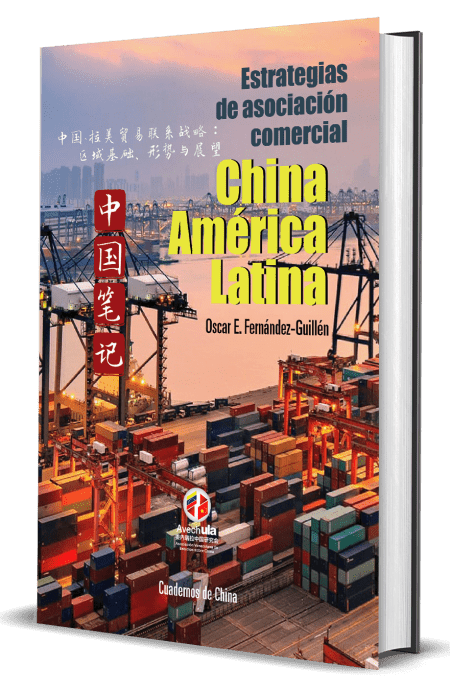
Estrategias de Asociación Comercial China-América Latina: Bases, situación y perspectivas para la región [China-Latin America trade association strategies: Bases, situation and perspectives for the region]
Oscar E. Fernández-Guillén
Using a documentary and quantitative research, supported by the analysis of publications (academic, official and informative) and international economics variables, the study identifies the bases that support the diplomatic relations renewal between China and Latin America with the dawn of the 21st century, in a symbiotic context of growing Chinese geoeconomic interests and Latin American geopolitical reformulations. It is found that the accelerated deepening of these links responds to an economic partnership strategy implemented by Beijing through omnidirectional cooperation with two general characteristics: 1) its purpose is to complement national strengths to achieve the development of the parties and 2) it is practiced differently according to the partners’ contribution to Chinese strategic interests. Among other things, it concludes that taking advantage of the benefits offered by Chinese economic cooperation depends on the responsibility, commitment and response of Latin American states at the level of their own interests and domestic policies.
La política exterior china hacia África, 1949-2018 [China’s Foreign Policy Towards Africa 1949-2018]
Nelson García Pernía
Once the founding of the People’s Republic of China was proclaimed in October 1949, this country began a gradual process of rapprochement with the countries of the «Third World» despite the international isolation it experienced, which was overcome with its recognition as the legitimate government of the Chinese people at the United Nations in 1971. In this sense, the purpose of this paper is to analyze China’s foreign policy towards the African continent, taking into account the imperatives that motivated it: at first, for ideological reasons, by supporting the liberation movements. Subsequently, it gave way to a more economy-oriented relation, influenced by the reform and openingup program initiated in 1978. Meanwhile, in the 21st century, the Sino-African bond entered a new phase with the creation of the Forum on China-Africa Cooperation (FOCAC), which has redefined Beijing’s actions towards this continent by addressing multiple fronts of bilateral and multilateral cooperation.


Las relaciones exteriores entre Chile y China: Nuevas instancias de cooperación en América Latina [The Foreign Relations between Chile and China and the new instances of cooperation Latin America]
Ana María Moure Pino
Chile adheres to the principles of respect for international law, through its membership in various international organizations and with States at a multilateral and bilateral level, promoting its economic relations, cooperation, development and trade, especially with China, which is Chile’s first commercial partner, and ranks first with respect to the country’s exports and imports.
China y América Latina: Territorios ancestrales de sus culturas para las ideas y la acción ecológicas [China and Latin America: Ancestral territories of their cultures for ecological ideas and action]
Meng Xiayun
China and Latin America have their own history of civilizations. Different and similar situations of historical development make the two areas share and disagree in cultural and ideological aspects. Ancient Chinese ecological thoughts focus on the doctrines of Confucianism, Taoism, and Buddhism, and have gradually matured and improved over several generations. While the cultures of the three most important ancient pre-Hispanic civilizations within the territory of what we currently known as Latin America: the Mayan, the Aztec, and the Inca, also reflect their own ecological conception, which has persisted for more than a thousand years. The ancient civilizations of China and those that existed before the arrival of Europeans to the American continent promoted an ecological thought encrypted in the ancient languages of both China and those of American cultures, they harbored fear and worshiped nature. By comparing the mental structures linked to the consciousness about the nature of Chinese civilization and the current Latin American civilization, inherited from the indigenous ancestral world, this paper attempts to present the characteristics of these two contexts in ancient and modern times, in that sense.


Literatura china clásica confuciana y taoísta: Referentes y patrones mitológicos [Classical Chinese Confucian and Taoist literature Mythological references and patterns]
Julio López Saco
Classical Confucian literature, rationalized and bureaucratized, the driving force behind the control of the functioning of society and the influence of the hierarchization of family and social relations, promoted the values of an intellectual culture that undervalued the influence of mythical-religious impulses and motifs, images, and symbols of the past. Nevertheless, certain mythical glimpses of the origins and heroes of the Golden Age survive. Classical Taoist literature reveals the metaphysical background of Dao, suggesting and evoking images that go so far as to associate Dao with an original, perhaps Neolithic, divinity. The imaginative, moving, and insinuating sense of myth, the foundation of the archaic Chinese mentality, is only found fresh in the mythographic collections. The iconography and the detailed inventories of tools and objects (especially funerary) of the material culture, complement some ideals that appear in the literature in a symbolic perspective.
The nuevo concepto de desarrollo de Xi Jinping [Xi Jinping’s new development concept]
Juan Sebastián Schulz
In January 2016, current Chinese president Xi Jinping called on the Chinese Communist Party cadres and government officials to push for a “new development concept” (新 发展 理念, xīn fāzhǎn lǐniàn), defined as a “systematic theoretical system which answers a series of theoretical and practical questions about the purpose, motivation, mode, and path of development” of the Chinese people. From there, the exhortation to build a new development concept has been recurrent in all the documents of the CCP and the Chinese government. Within this framework, this paper aims to analyze the main characteristics of this concept, recovering its context of emergence, its main features, the link with the “common prosperity” and “dual circulation” initiatives, and the importance it has for the current stage of China’s development.


Venezuela y China: Juntos en la cuestión de El Salvador [Venezuela and China: Together on the El Salvador issue]
Norbert Molina-Medina
In the history of Venezuela’s international relations, the chapter on the strengthening of Sino-Venezuelan ties during the administration of President Luis Herrera Campins (1979-1984) is not well known. The tensions of the Cold War had also produced the East-East dispute between the Union of Soviet Socialist Republics (USSR) and China for the leadership of the international communist movement, and in this dynamic, the United States of America (USA), after the rapprochement and normalization with Beijing in 1972 and 1979, coincided with the Asian giant in denouncing the actions of the USSR in the world. This is the case of the Central American conflict of the 1970s and 1980s. Therefore, we propose to analyze the alliance that led China and Venezuela to participate in the conflict in El Salvador in direct alignment with the U.S. and against the intervention of the USSR and Cuba.
Panamá y China: Una relación de tres siglos [Panama and China: A relationship of three centuries]
Ana Morales-Anderson
This paper presents the progress of my doctoral research, whose objective is to analyze, in a select corpus of four works, the narrative of Panamanian writers of Chinese descent to discover literary and linguistic features of their ancestral heritage and contact culture. In this particular case, a hermeneutic analysis of the book Relaciones entre Panamá y China (siglos XIX, XX y XXI) by the writer Berta Alicia Chen was carried out. It is noted that, in the historical discourse, the author describes in detail three transcendental events of the Panamanian social reality: the arrival of the Chinese to the Isthmus, the establishment of diplomatic relations with China, and the global vision of China called the Belt and Road Initiative. It is concluded that, despite the indisputable historical foundation, the author’s passion for making Chinese culture visible stands out in the work.


China: Resiliencia y desarrollo [China: Resilience and Development]
Elda Molina Díaz y Eduardo Regalado Florido
In 2021, the Chinese economy grew by more than 8%, demonstrating its resilience and robustness in a very complex scenario, both internally and externally. Likewise, the country continues to hold a relevant position in the global economy, especially in trade and also, although to a lesser extent, in international finance. However, this does not mean that China has solved the difficulties associated with the crisis resulting from the COVID-19 pandemic and other problems that had been brewing before, which were somehow precipitated in the current context. The aim of this paper is to show China’s economic performance in the last two years, to summarize the main aspects that constitute the causes of such behavior, as well as its implications for the country itself and the international economy, due to the importance of this actor in the global scenario.
Transformaciones en la matriz energética de la República Popular China [Transformations in the energy matrix of the People's Republic of China]
Rachel M. Arencibia Casanova
The People’s Republic of China is currently the world’s largest market for renewable energy, although it remains the world’s largest consumer of coal and, consequently, the world’s largest emitter of carbon dioxide. The nation still relies heavily on oil and gas exports for its industrial needs. Therefore, expanding low-carbon energy supply sources and capacities must be a priority in the short term to consolidate its socio-economic development by 2050. The Asian giant’s challenges will be closely linked to boosting its energy security. Thus, its sustained economic growth will be associated with increasing its endogenous capacities in the field of clean and sustainable energy.


El Globo según China. Una lectura de la Iniciativa para la Seguridad Global [The Globe According to China. A Reading of the Global Security Initiative]
Edduar Bassan El Khuffash Álvarez
Since the economic Reform and Opening-up policy in 1978, the foreign policy agenda of the People’s Republic of China has been dominated by economic and trade issues. Without deviating from this, President Xi Jinping has added the issue of security as a new anchor of Beijing’s international strategy. In this context, and as part of the plan to reformulate the liberal pillars of global governance, the Chinese Foreign Ministry presented the Global Security Initiative in February 2023. In the following, and supported by the theoretical premises of history and international relations, we will examine the concepts and cooperation priorities outlined in China’s Global Security Initiative Concept Paper. Documento conceptual de la Iniciativa China de Seguridad Global.
La pintura china y la educación ambiental [Chinese Painting and Environmental Education]
Belén Dorado Marín de Espinosa
In China, painting was conceived as the result of a thought based on the observation of nature and the understanding of the elements that make up the whole of which the human being is a part. Thus, Chinese painters and calligraphers were able to go beyond the mere physical appearance of the elements and extracted from them what makes them unique. Each thing was given a place, and the human being was given the smallest part and the most difficult task: maintaining the balance between all the things that make up the environment. Observation was the key to the development of the genres of Chinese painting, and expressing the vividness of things to the viewer makes Chinese painting a means of understanding the harmony of nature, necessary for the life and preservation of all that exists beneath the sky.


Relaciones bilaterales entre China y Uruguay: Antecedentes, temas y mecanismos [Bilateral Relations between China and Uruguay: Background, Issues, and Mechanisms]
Andrés Raggio
Political relations between China and Uruguay in the 21st century have evolved significantly compared to the 20th century. These relations have taken place within the framework of China’s multi-level foreign policy (regional multilateral, national bilateral, and local bilateral) and have developed a considerable breadth of issues, which implies a new stage for less superficial and more complex relations. Their development has focused on strengthening important channels of dialogue as mechanisms for interaction. Such political relations should continue to rely on these mechanisms and promote action plans between the two parties, whether in the framework of global initiatives (strategic partnership) or from local-to-local relations.
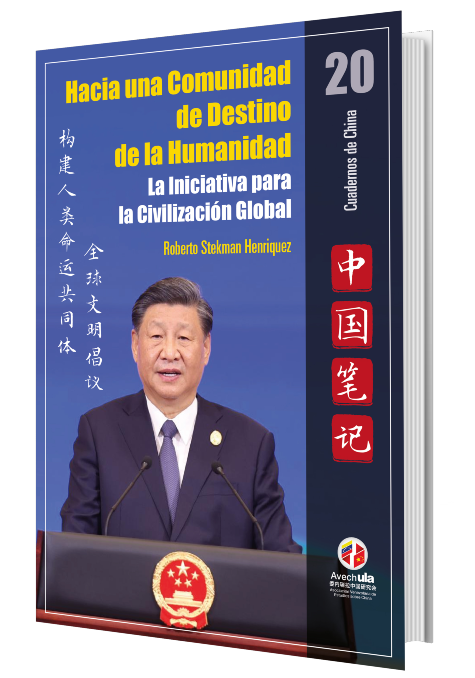
Hacia una Comunidad de Destino de la Humanidad: La Iniciativa para la Civilización Global: [Towards a Community of Shared Future for Mankind: The Initiative for Global Civilization]
Roberto Stekman Henriquez
Since its founding in 1949, the foreign policy of the People’s Republic of China has shifted from national consolidation to an increasingly active international presence. Under Xi Jinping’s leadership, this trajectory has crystallized in the proposal for a Community of Shared Future for Mankind, which seeks to redefine the pillars of global governance beyond the Western liberal paradigm. Within this framework, Xi Jinping launched the Global Civilization Initiative in 2023, aimed at placing cultural diversity and dialogue between civilizations at the heart of international cooperation. Next, assisted by a historical-discursive and comparative approach under the constructivist paradigm, we examine the concepts, principles, and mechanisms of cooperation that underpin the Global Civilization Initiative, as well as its potential to articulate an alternative international order.
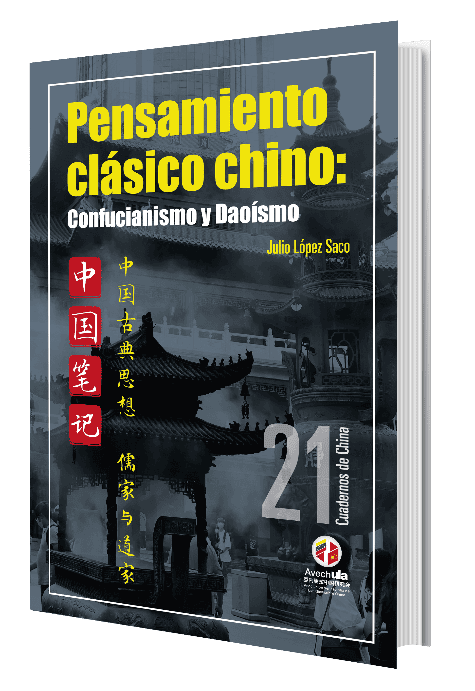
Pensamiento clásico chino: Confucianismo y Daoísmo [Classical Chinese Thought: Confucianism and Daoism]
Julio López Saco
This text is an academic introduction to Confucianism and Daoism as the autochthonous pillars of Chinese spirituality and thought, both originating during the crisis of the Zhou dynasty (8th–3rd centuries BCE). It explores their historical origins and key principles—relational ethics and rituals in Confucianism, as well as harmony with the Dao, non-action, and practices for achieving immortality in Daoism—through classical works such as the Daodejing o Zhuangziand their syncretism in Chinese art, politics, and society. It also details religious Daoist schools (Celestial Masters, Shangqing, Lingbao, Quanzhen, Zhengyi), alchemical rituals, and their influence on literature, medicine, and visual culture. It concludes by emphasizing the enduring relevance of Confucian ideas and Daoist notions in modern Chinese ethics, along with their historical persistence in contemporary China.