
Cuadernos de Cultura China
中国文化笔记本
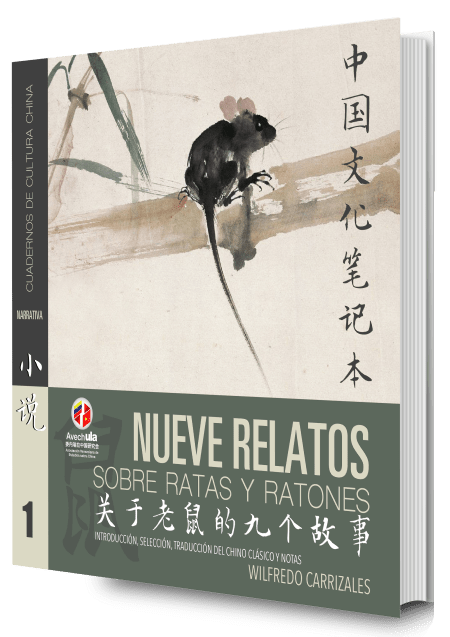
Nueve relatos sobre ratas y ratones [Nine stories about rats and mice]
Many authors
These stories about rats and mice have been published three times with the following titles: a) Three stories about rats and mice;1 b) Six stories about rats and mice;2 and c) Nine stories and two poems about rats and mice.3 At the request and with the authorization of the translator, Cuadernos de Cultura China 中国文化笔记本, a publication attached to the Venezuelan Association for Chinese Studies (AVECH) 委内瑞拉中国研究会, presents its first issue with the edition of Nueve relatos sobre ratas y ratones [Nine stories about rats and mice] (Introduction, selection, translation from classical Chinese, and notes by Wilfredo Carrizales).
1 Letralia, sección TRANSLETRALIA, Venezuela, 8 de febrero de 2020. Véase en: https://letralia.com/transletralia
2 Revista digital Evaristo Cultural, sección SEDA, Argentina, 28 de febrero de 2020. Véase en: evaristocultural.com.ar
3 Revista digital ALMIAR, 109 (Madrid, marzo – abril de 2020). Véase en: almiar.blogspot.com
Las Montañas Lejanas [The distant mountains]
Jidi Majia
Jidi Majia is our guide in this significant encounter with poetry, unparalleled because he manages to tell us with his voice the most protected part of Chinese culture. The Asociación Venezolana de Estudios sobre China (AVECH) 委内瑞拉中国研究会 through the collection Cuadernos de Cultura China offers us the first delivery of the poetry series 诗歌, with a journey to the depths of a people, a walk through its time, its mysteries, its essential gift, with transparent and pure word from one of its most representative poets: The Distant Mountains 远山 by Jidi Majia. For this occasion, we have been wonderfully accompanied by the translation made by Professor José Manuel Briceño Guerrero in 2010, published in Venezuela by La Castalia under the title Tiempo (Time), after his trip to the land of the Chinese poet from which this translation and other texts that sought to unravel the most intimate traditions of the Yi people were born, as Jidi Majia himself shared with him some unforgettable days in these mountains so close and at the same time so different, strong and powerful, because from them are born not only mighty rivers, but also splendid words full of veiled light that knows how to preserve Poetry.


Covid-19: Propuesta de prevención y tratamiento con Jīng Fāng [COVID-19: Proposal for prevention and treatment with Jīng Fāng]
Huáng Huáng, Yáo Yīzhōng, Liú Jīnhóng, Lǐ Yīmíng, Lù Yàn, Zhāng Xuēguāng y Yáng Dàhuá
In March 2020, Venezuela decreed quarantine as a result of the expansion of the COVID-19 pandemic in Latin American countries. It first emerged in late 2019 in the Chinese city of Wuhan, consisting of a severe acute respiratory syndrome that brings with it coronavirus disease. In this sense, with this publication we offer a treatment that seeks to «promote the use of Jīng Fāng in the prevention and treatment of COVID-19, based on research of ancient literature and the results of current clinical research», providing an intervention program of Jīng Fāng (classic formulas in Traditional Chinese Medicine, an ancient method of treatment of medicinal herbs created around 3,000 BC) divided into four aspects: formulas for group treatment, individual, psychological and for prevention.
Catorce relatos sobre bueyes, toros y vacas [Fourteen stories about oxen, bulls, and cows]
Many authors
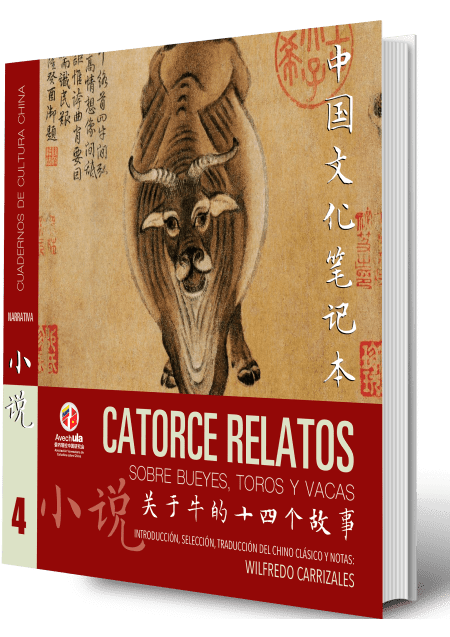
This February 12, 2021 marks the beginning of the new Chinese lunar year, which corresponds to the second animal of the sexagesimal cycle, the ox, ruled by the metal element, that is, the metal ox, which will culminate on January 31, 2022. For this special reason, we begin 2021 with a new proposal in the narrativa 小说 colection of Cuadernos de Cultura China entitled: Catorce relatos sobre bueyes, toros y vacas [Fourteen stories about oxen, bulls, and cows] 关于牛的十四个故事 (Introduction, selection, translation from classical Chinese and notes) by the Venezuelan sinologist Wilfredo Carrizales who, for the second time, and very generously, accepted our invitation.

Huellas del arte tradicional chino en la obra de Alirio Palacios y Francisco Hung [The trace or influence of traditional Chinese art in the artwork of Alirio Palacios and Francisco Hung]
Edwin García Maldonado
Alirio Palacios and Francisco Hung are two Venezuelan artists of recognized national and international trajectory whose artworks had an echo of the Chinese tradition, given the link and approach of both artists to this culture during the second half of the 20th century. In this sense, we propose a descriptive and comparative study seeking to point out the trace or influence of traditional Chinese art in the graphic and pictorial artwork of the Venezuelan masters Palacios and Hung, exponents par excellence of our artistic modernity, in order to specify meeting points between their poetics.
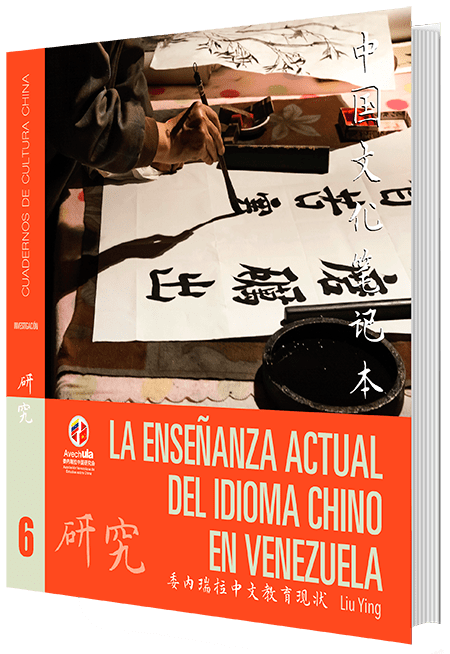
La enseñanza actual del idioma chino en Venezuela [The Current Teaching of the Chinese Language in Venezuela]
Liu Ying 刘颖
By exploring the status quo on the teaching of the Chinese language, this paper seeks to evaluate the development of the Confucius Institute of the Bolivarian University of Venezuela in Caracas, analyzing the main characteristics of this project, as well as the difficulties that have arisen in such important educational work. For this purpose, we use interview methods and specialized documentation review, all of which leads us to visualize the efforts made by China and Venezuela in terms of cultural exchange as one of the vital axes of cooperation.

Escritos acerca del Tigre [Writings about the Tiger]
Wilfredo Carrizales
From February 1, 2022 to January 21, 2023 is the Year of the Tiger(Hu Nian)Since the Zhou Dynasty (11th century – 256 B.C.) the Chinese have designated the years according to a cycle formed by sixty binary combinations (pairs with pairs and nones with nones) of the ten Celestial Trunks (Tian Gan) with the twelve Earthly Branches (Di Zhi). The first year of each Sexagesimal Cycle (Liu Shi Jia Zi) is named with the first two characters of both series, the second year with the second characters and so on.
El Patrimonio Cultural Inmaterial de China [China's Intangible Cultural Heritage]
Liu Ying 刘颖
This paper takes China’s Intangible Cultural Heritage as the research object, especially the intangible cultural heritage elements presented during the Beijing Winter Olympics (2022). By exploring and analyzing the related literature and based on the concept of Intangible Cultural Heritage, it can be seen that mutual understanding and knowledge in the field of Intangible Cultural Heritage is conducive to strengthening cultural exchanges and learning between China and Venezuela, and even between China and Latin America.
